An Ames Startup is Making Waves in Marine Energy Research
Launching an ocean-oriented company from landlocked Ames? Sounds far-fetched
Yet, thousands of miles from offshore surges in Alaska or Hawaii, Peak Engineering LLC (PEAK) is developing and testing technology to generate power from waves. Their goal: to create a cost-effective, multifunctional barrier that protects coastlines while producing electricity.
According to a small business award granted by the U.S. Department of Energy (DOE), PEAK’s Phase I simulations show “exceptional technical and commercialization progress.” The startup’s early-stage success proves that PEAK’s Midwest headquarters offer plenty of advantages to a company modeling marine energy conversion. Iowa’s leadership in renewable energy, esteemed research institutions, and accessible entrepreneurship programs support innovation.
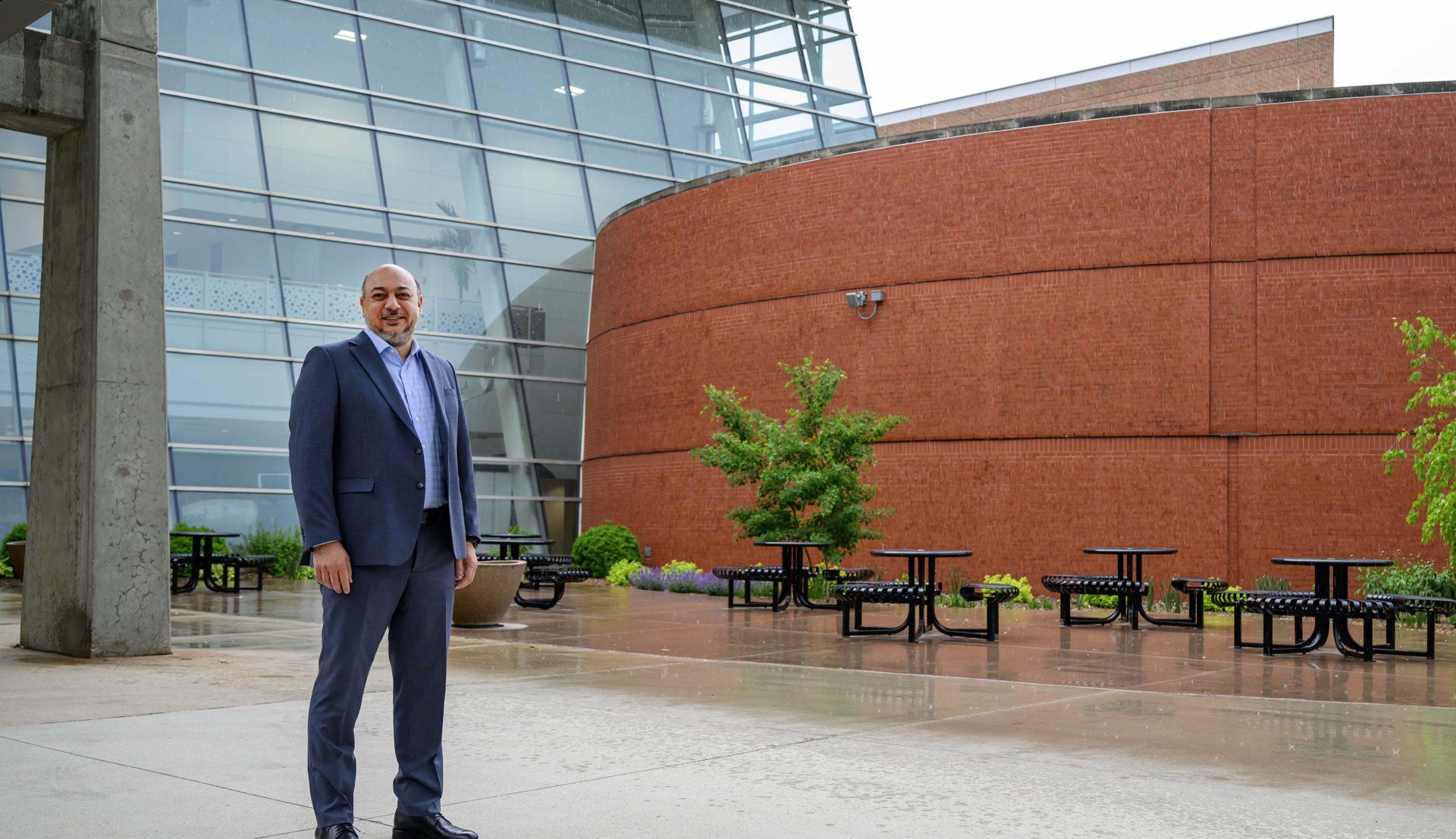
“Here in Iowa, I probably have more resources than others who are closer to the ocean,” said PEAK founder and CEO Ossama Abdelkhalik.
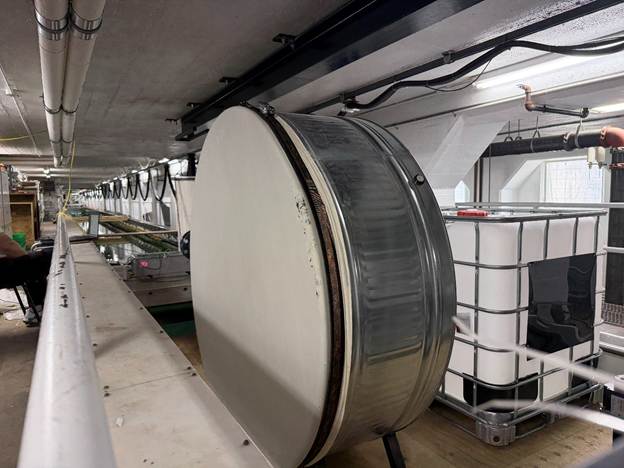
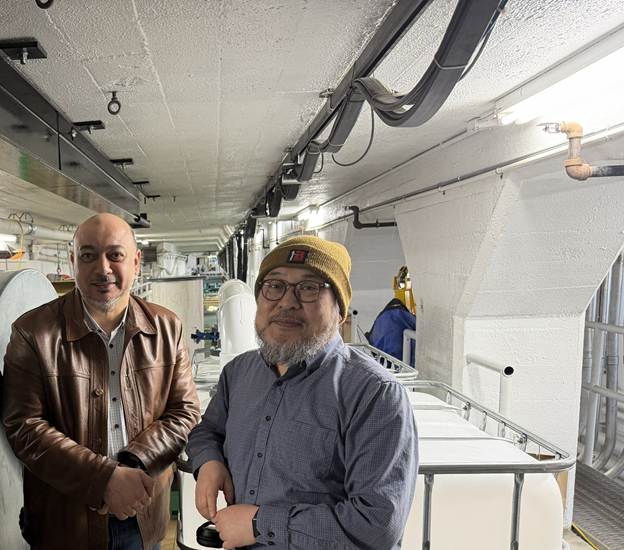
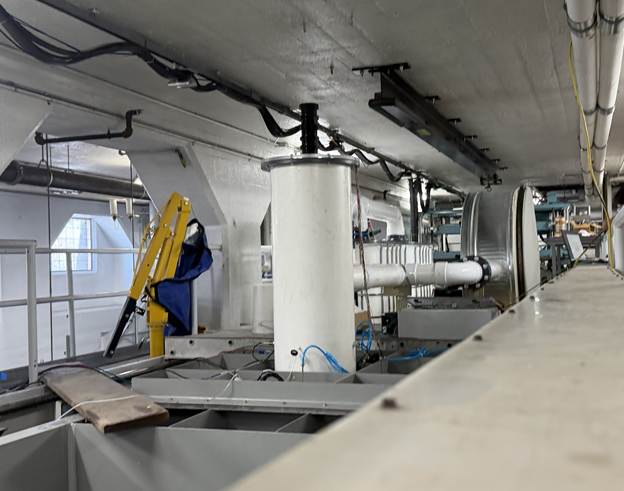
“Just two hours from me, at the University of Iowa, the Iowa Institute for Hydrodynamic Research (IIHR) has a cold wave tank that can generate waves for research and development. There’s a lot of work that needs to be done in this type of facility [before testing in the ocean], and the cost for running experiments there is very reasonable.”
Turning Expertise into Economic Impact
An accomplished scientist, Ossama serves as Professor and Vance D. Coffman Faculty Chair in Iowa State University’s Department of Aerospace Engineering. He collaborates with his PEAK team during his free time. Ossama and co-founder Paul Koola, a Texas A&M University professor, were both publishing papers about ocean wave energy conversion devices. By starting PEAK, they could work to advance industry applications more directly, as a source of renewable energy.
According to DOE estimates, the United States has tremendous wave energy resources, equivalent to approximately 34 percent of all U.S. power generation. As the nation’s need for electricity continues to expand, converting even a fraction of that flow could significantly contribute to energy independence.
Campus colleagues encouraged Ossama to participate in the ISU Startup Factory, a startup incubator that assists inventors in developing a road map to prove out and launch their technology. Through his involvement in that program and utilizing Iowa Economic Development Authority assistance, PEAK applied for DOE funding through America’s Seed Fund and won.
Winning SBIR/STTR Small Business of the Year
PEAK’s efforts to complete a competitive proposal paid off. In 2024, the company received $1,356,500 in non-dilutive funding from the Small Business Innovation Research (SBIR) and Small Business Technology Transfer (STTR) programs to develop its technology and chart a path toward commercialization.
PEAK was also named the 2024 SBIR/STTR Small Business of the Year. The award recognizes a U.S. small business for stimulating U.S. technological innovation, fostering commercialization, and contributing to economic growth. Before filing a patent of its technology, the PEAK team engaged regulatory and research agencies as well as industry partners, including coastal developers, engineering firms and utilities. The next phase involves transitioning toward large-scale validation.
“Currently, this technology is not yet mature, anywhere in the world,” Ossama said. “What we hope for, in the future, is to build the full-scale device ourselves at PEAK and demonstrate its commercial viability.”