Here’s how Iowa is growing its aerospace and defense industry through talent, research and investment.
This article originally appeared as a sponsored story on USA Today.
By Melissa Karns
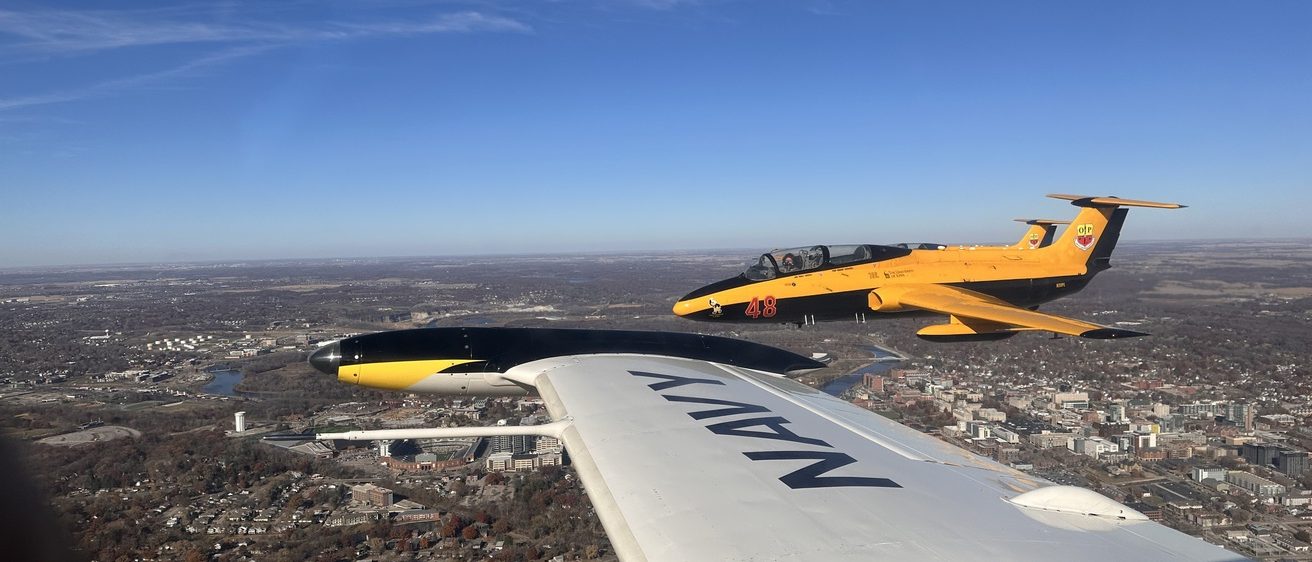
With roots in aviation dating back to the 1850s, Iowa has played a quiet but important role in the aerospace and defense sector. Across the state, airports large and small help power local economies and connect Iowa-based businesses to global markets, while research labs support aerospace innovation and Iowa’s colleges and universities have trained thousands of pilots, mechanics and engineers.
Now, in a state better known for farmland than flight paths, unified leadership across the state is accelerating Iowa’s emergence as a critical hub in aviation, aerospace and defense innovation.
From workforce development programs to cutting-edge research at universities, a growing network of business, education and government leaders are working to position Eastern Iowa as a destination for aerospace investment and expansion.
The effort comes in response to aerospace and defense companies searching for places with room to grow, strong infrastructure and reliable talent pipelines. Iowa leaders say the state meets those top needs — along with the added benefits of lower operating costs and a business climate built for long-term growth.
“We have the sites, we have the incentives, we have the workforce, we have the innovation.” said Marty Lenss, Eastern Iowa Airport director. “Here, you’re just a connection away from your next big thing.”
That momentum is helping Iowa gain attention beyond the Midwest, including at major international events. At the upcoming Farnborough International Airshow, Iowa leaders plan to highlight the state’s growing aerospace and defense ecosystem to industry decision-makers.
Meet Iowa at booth #2428 at the 2026 Farnborough International Airshow from July 20-24.
Aviation in Iowa’s economy
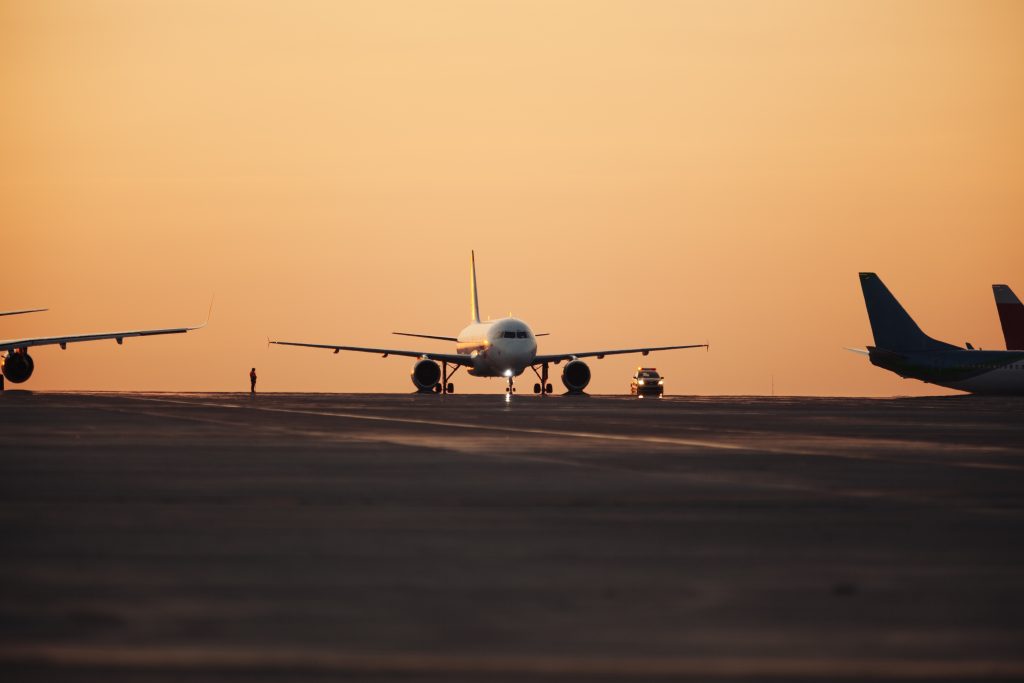
Looking at the numbers, Iowa is already home to 106 general aviation airports, according to the Iowa Department of Transportation’s Office of Aviation. Adding to that, the state has 34 repair stations, four FAA-approved pilot schools, more than 870 flight instructors and more than 2,000 student pilots.
In 2025, Iowa exported $861 million in aviation parts and electronics to 127 countries.1
Building an aerospace cluster
In Eastern Iowa, much of the current focus centers around the Eastern Iowa Airport (CID) and a broader regional strategy to create an aerospace cluster that connects research, education, workforce development and private industry.
Last year, CID partnered with the Iowa Economic Development Authority to commission a study outlining how the region could attract aerospace companies and future investment. The study identified opportunities tied to workforce development, payload support and satellite technologies — areas where Iowa already has growing expertise.
Training the aviation workforce of tomorrow
Partnerships with colleges and universities across the state are another part of the strategy. At Kirkwood Community College, for example, students are training for careers in aircraft maintenance through the school’s aviation maintenance technology program, which launched at CID last fall. To support the program, the airport converted a hangar into a hands-on training space.
Strong enrollment and waiting lists are further evidence of the high demand for aviation maintenance careers, particularly as the industry faces workforce shortages nationwide.
At Coe College, a new flight school and aviation management program developed in partnership with Revv Aviation, is helping students prepare for careers as pilots and aviation leaders. Programs like these give students direct industry experience while helping Iowa build a long-term talent pipeline for aviation and aerospace employers.
That workforce pipeline remains one of Iowa’s biggest selling points. The state ranks among national leaders in STEM and manufacturing talent, including the nation’s third-highest concentration of mechanical engineers and manufacturing workers, according to federal labor data.23
Research that reaches higher
Iowa’s universities are also playing a growing role in the state’s aerospace future.
At the University of Iowa, school leaders recently joined economic development officials and airport executives to discuss how the institution’s research strengths could support the aerospace cluster strategy.
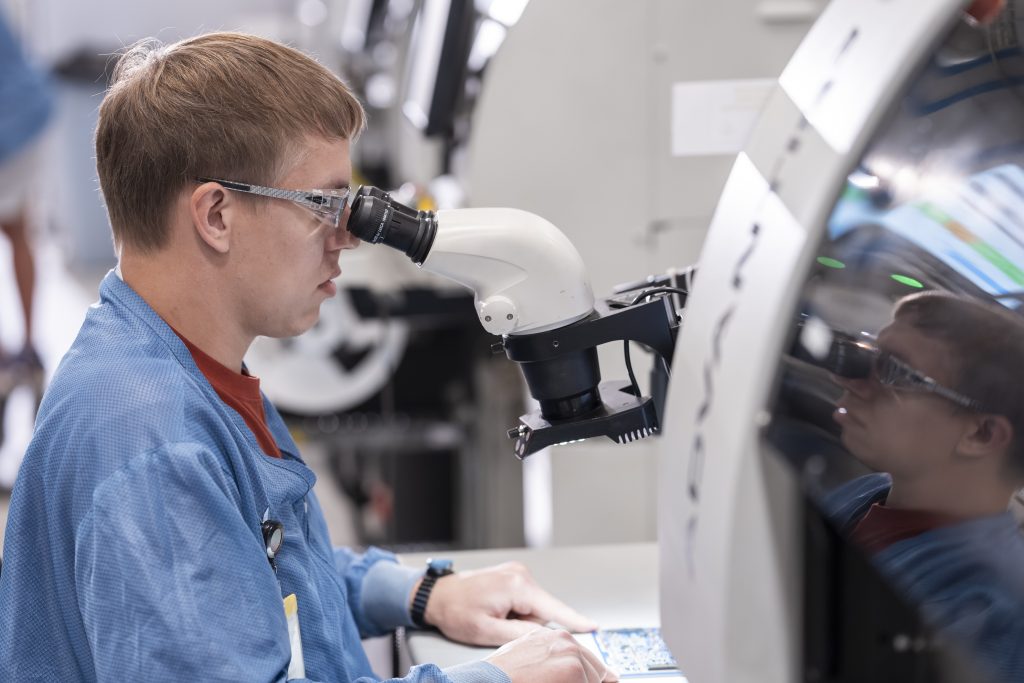
One major asset is the University of Iowa’s Operator Performance Laboratory, which has long studied human performance, aviation safety and aerospace-related systems.
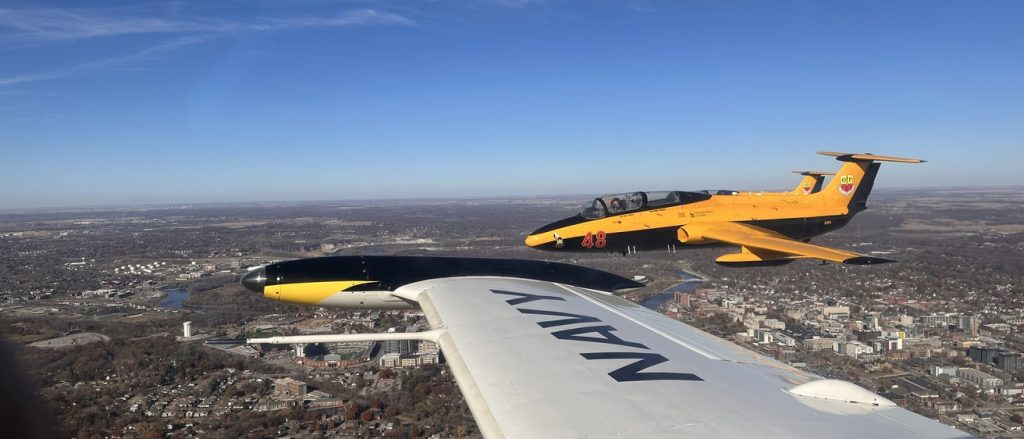
Another is the Iowa Spaceflight Laboratory inside Van Allen Hall, where faculty and engineers design, build and test space instruments for research and commercial projects. The lab has worked with companies like Boeing, Ball Aerospace and Northrop Grumman.
The facility also has the potential to attract additional private-sector partnerships as aerospace companies look for research collaborators with specialized expertise.
The university is also helping develop future aerospace talent through its Edge of Space Academy, a paid summer research program where undergraduate students build and fly small space instruments designed to study Earth and the atmosphere.
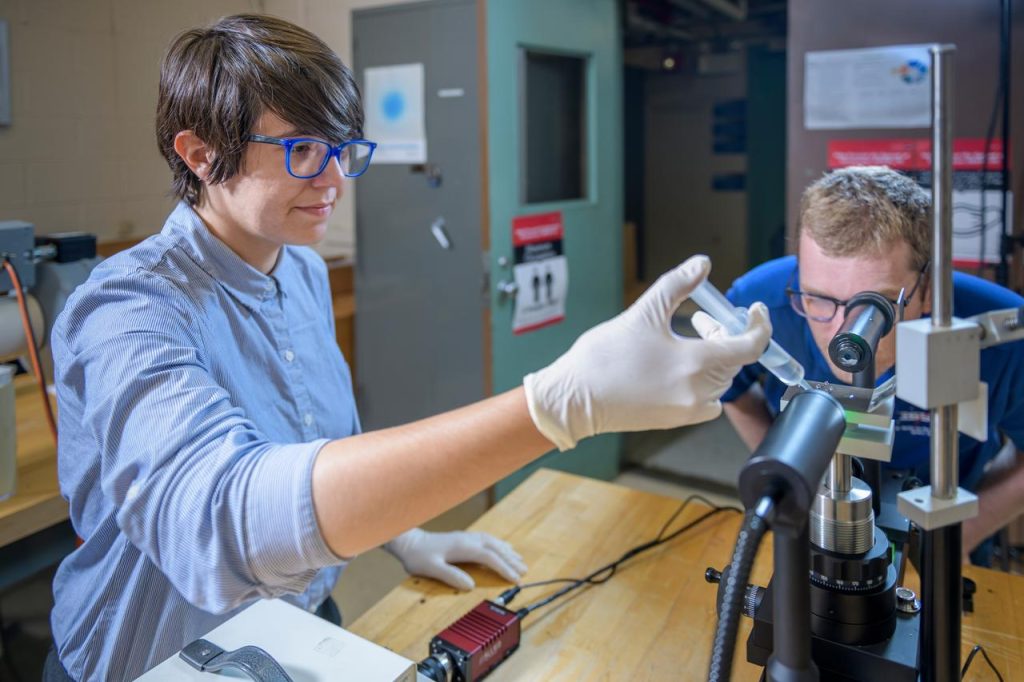
At Iowa State University, aerospace research and workforce development have deep roots as well.
The Iowa Space Grant Consortium, led by Iowa State since 1990 as part of NASA’s National Space Grant College and Fellowship Program, supports STEM research, internships, scholarships and outreach programs connected to NASA’s mission. The consortium includes partnerships across higher education, government, industry and science organizations throughout Iowa.
Iowa State also leads Iowa NASA EPSCoR, a program that helps strengthen research partnerships between universities, government and industry while supporting projects aligned with NASA priorities and emerging technology needs.
The university’s Department of Aerospace Engineering has a long history in aviation and aerospace research dating back nearly a century. Over the years, Iowa State researchers have helped advance fields including computational fluid dynamics, aviation weather safety and aircraft icing research, while students gain hands-on engineering and design experience tied to real-world aerospace challenges.
Together, programs like these are helping Iowa build the next generation of aerospace talent while strengthening the state’s growing reputation for aviation and aerospace innovation.
“We have an amazing workforce and amazing training opportunities for people interested in the industry,” said Dr. Sara Nelson, Director of the Iowa Space Grant Consortium and NASA ESPCoR. “Ultimately, I want Iowa to become NASA’s center in the Midwest, but that’s only going to come through really intense collaboration with our partners across the state and continued investment in building our talent pipeline.”
Room to grow
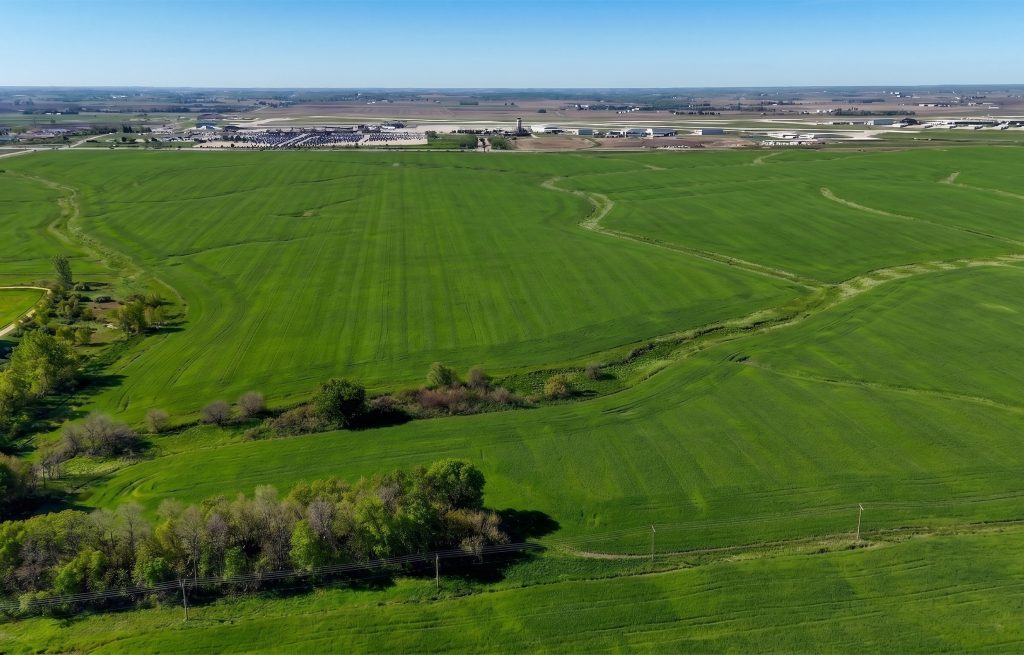
When outlining the state’s advantages for companies planning to expand or relocate, leaders point to Iowa’s lower cost of doing business, affordable energy, reliable infrastructure and available land.
In aerospace and defense, where large facilities and long-term investments are common, those factors can carry significant weight.
One major project is the planned “Track Seven” maintenance repair facility, a 40-acre site expected to house aircraft maintenance operations capable of servicing Boeing 737 aircraft and other planes.
The project reflects both growing demand within the aviation industry and a larger strategy to keep trained workers in the region after graduation.
At the same time, CID continues investing in airport infrastructure through a $120 million terminal modernization project designed to improve passenger experience and support future growth. Roadway improvements, parking expansions and long-term planning designed to accommodate increased demand are other big focuses.
Across the state, Iowa airports continue to modernize facilities and expand services as passenger traffic grows. More than 4 million airline passengers now board flights in Iowa annually, according to state aviation data.
Economic development leaders also believe Iowa’s central location and transportation network create advantages for aerospace and defense companies managing national and global supply chains.
Compared to crowded coastal markets, Iowa has the major benefit of room to scale. That includes development-ready sites allocated through the state’s Certified Sites program, which is geared toward reducing risk and streamlining the site selection process to expedite development. These sites are situated near transportation hubs and industrial corridors, as well as large tracts of land positioned for future projects. Leaders are also promoting the future CID Superpark development site – identified via the Certified Sites program – near the airport as part of the state’s long-term vision for aerospace and aviation growth.
Iowa’s business environment is a significant draw. The state offers competitive corporate tax rates, workforce training support, research and development incentives, and lower industrial construction costs than many national markets.
For those weighing growing energy demands in their decision-making, Iowa ranks among national leaders in renewable energy production and power reliability — an increasingly important factor for advanced manufacturing and aerospace operations.
Turning momentum into opportunity
Leaders say those opportunities align with a broader shift happening across the aerospace industry as companies seek lower-cost regions with strong workforce potential and stable business climates.
For Iowa, the goal is not to simply attract one project or one employer.
The larger vision is creating an ecosystem where airports, universities, manufacturers, workforce programs and private companies work together to support long-term innovation and economic growth.
As Iowa continues telling that story to national and international audiences, supporters hope more aviation, aerospace and defense companies will begin to see the state in a new light — not as flyover country, but as a place where the future of the industry is already taking flight.
To learn more about Iowa’s aviation, aerospace and defense opportunities, workforce advantages and development-ready sites, visit the Iowa Economic Development Authority.
- WISERTrade ↩︎
- Bureau of Labor Statistics, 2024
↩︎ - National Science Foundation, 2026: https://ncses.nsf.gov/pubs/nsb20245/geographic-distribution-of-the-stem-workforce
↩︎